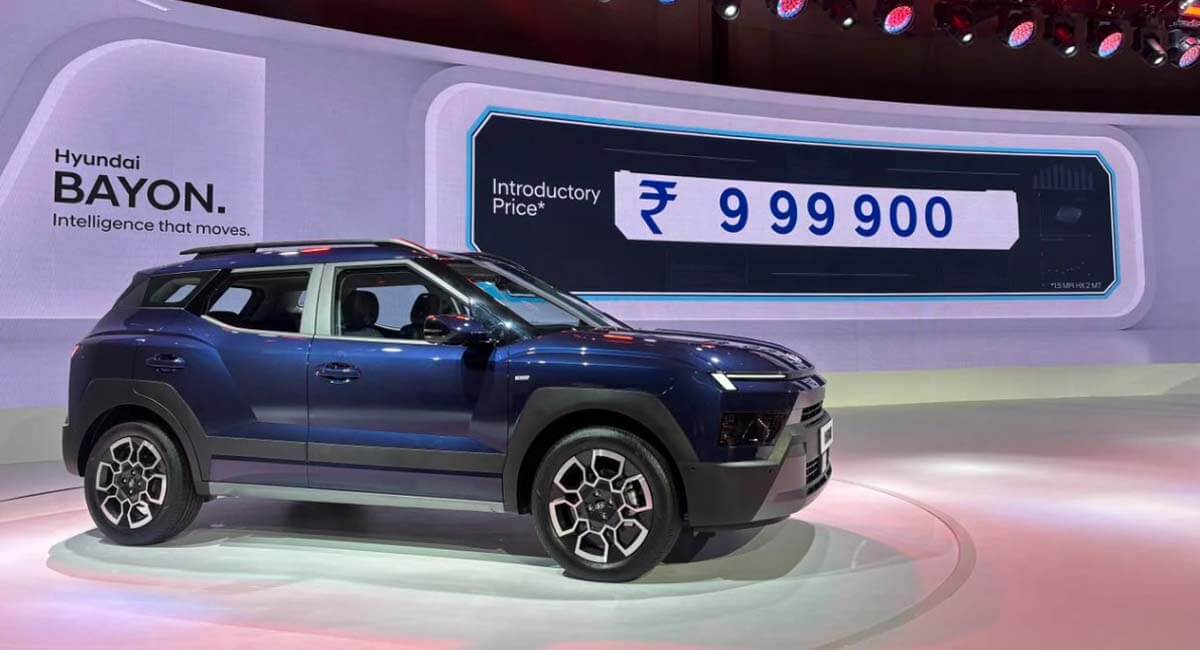
The new mid-size SUV gets a 1.5-litre petrol engine, Level 2 ADAS, a panoramic sunroof and two 12.3-inch displays.
Hyundai has launched the Bayon in India at an introductory price of Rs 9.99 lakh (ex-showroom). The new SUV sits below the Creta in Hyundai’s lineup and is now available for bookings. It will compete with models such as the Kia Seltos, Tata Sierra and Maruti Suzuki Victoris.
The Bayon will be manufactured at Hyundai’s Chennai facility in both right-hand-drive and left-hand-drive versions. This will support sales in India and exports to international markets.
Hyundai Bayon: Design and Dimensions
The Hyundai Bayon is 4.2 metres long, making it slightly shorter than the 4.3-metre Creta. It is based on Hyundai’s Global K Enhanced Platform and follows the company’s latest ‘Art of Steel’ design language.
At the front, the SUV features LED projector headlights and L-shaped daytime running lights (DRLs). These lights also work as turn indicators. Unlike some modern SUVs, the Bayon does not get a full-width light bar at the front or rear.
The side profile features flared wheel arches, sharp character lines and black body cladding. It also gets petal-style 17-inch alloy wheels. At the rear, a slim black band connects the visual design around the LED tail-lamps, while BAYON lettering sits on the tailgate. A roof spoiler with an integrated stop lamp completes the design.
The platform is designed with Indian crash-test safety standards in mind. Bharat NCAP crash-test results are expected by the end of 2026, according to the information provided.
Hyundai Bayon: Interior and Features
The cabin features two 12.3-inch screens arranged in a curved layout. One screen serves as the driver’s display, while the other handles the infotainment system. The climate controls sit below them, with shortcut buttons placed beneath the touchscreen.
The Bayon also gets a steering wheel similar to the new Hyundai Venue. A separate control pod houses the drive mode selector, which offers Eco, Normal and Sport modes.
Other comfort and convenience features include ventilated front seats, powered driver’s seat adjustment and a Bose sound system. The SUV also offers Type-C USB ports, wireless charging, ambient lighting, rear AC vents and two-step reclining rear seats. A panoramic sunroof is another key feature.
Hyundai has equipped the Bayon with a generative AI voice assistant that can understand conversational requests. It also gets Bluelink connected-car technology and over-the-air (OTA) software updates.
Hyundai Bayon: Safety Features
The Hyundai Bayon comes with Level 2 advanced driver assistance systems (ADAS). These systems use sensors and cameras to support the driver and help reduce the risk of certain collisions.
Other safety features include six airbags, a 360-degree camera and disc brakes on all four wheels. The SUV also gets hill-start assist control, electronic stability control and a tyre-pressure monitoring system. An electronic parking brake with auto hold is also available. However, the final safety assessment will depend on the official crash-test results.
Hyundai Bayon: Engine and Mileage
The Hyundai Bayon uses a 1.5-litre naturally aspirated petrol engine. It produces 115 PS of power and 144 Nm of torque. Buyers can choose between a six-speed manual gearbox and an iVT automatic transmission.
The petrol iVT version has a claimed ARAI-certified mileage of 18.6 km per litre. The automatic variant also features Dash Boost Mode, which provides an extra burst of power for overtaking.
Hyundai has not included turbo-petrol or diesel engine options in the lineup described. The SUV will also get a CNG option in January 2027, making it Hyundai’s first CNG-powered mid-size SUV in India.
Hyundai Bayon: Price and Availability
The Hyundai Bayon has been launched at Rs 9.99 lakh (ex-showroom), with bookings now open in India. Its position below the Creta places it in the mid-size SUV market alongside several established and upcoming rivals.
The SUV combines petrol power, a feature-rich cabin and a range of driver assistance systems. Buyers can consider its engine options, claimed mileage, safety equipment and comfort features before making a purchase.
Hyundai is expected to add the CNG version in January 2027. The company has also indicated that Bharat NCAP results are expected by the end of 2026.